Source No Watering Required Green Panel for Walls, Gardens, and Offices
Find 30 options for No Watering Required Green Panel solutions designed for vertical gardening, interior decoration, and outdoor landscaping. Compare materials like felt and PE, check pocket configurations, and review supplier capabilities for modular wall systems.
Key considerations
Products List
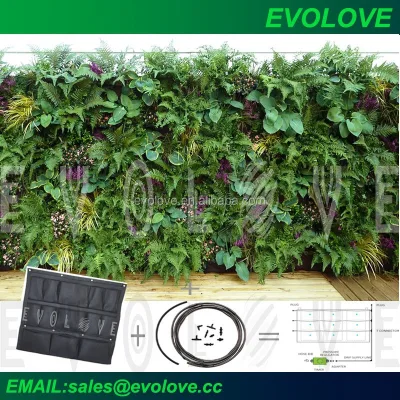
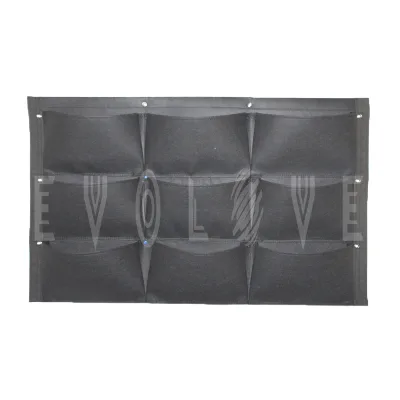

Evergreen Artificial Green Wall Panel - Perfect for Vertical Garden Styling
$0.65 - $2.58
MOQ: 40 Pieces


Artificial Green Wall Panel - Evergreen Vertical Garden for Modern Spaces
$0.65 - $2.58
MOQ: 40 Pieces


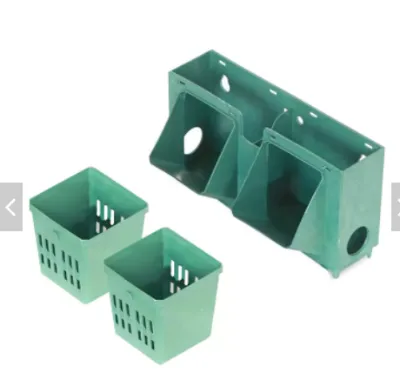

Lush Green UV-Resistant Outdoor Artificial Grass Wall Panels for Gardens
$18.50 - $22.00
MOQ: 500 Pieces


$3.00 - $10.00
MOQ: 10 Minimum
Hebei Yongchuang Jiahui Fountain Water-Saving Irrigation Technology Co., Ltd.
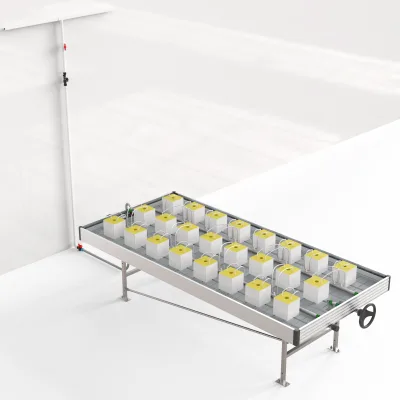


High-Quality Vertical Greenery Wall Artificial Grass Panel for Garden or Home
$13.00 - $15.00
MOQ: 10 Pieces
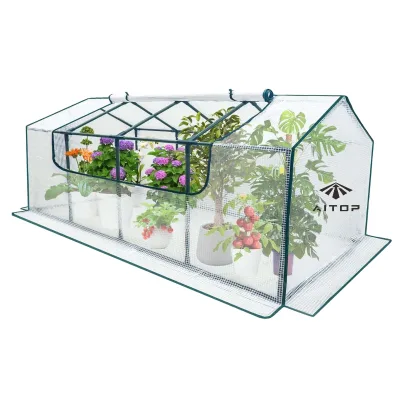
Flexible Waterproof Versatile Low-Maintenance Easy-to-Install Green House
$16.07 - $16.48
MOQ: 100 pieces
Comprehensive Sourcing Guide
No Watering Required Green Panel Sourcing Guide
The term "No Watering Required Green Panel" in the current market often refers to artificial vertical gardening solutions designed for low-maintenance decoration rather than functional hydroponic systems. Based on observed product attributes, these panels are typically constructed from artificial grass or felt fabrics that do not require active irrigation to maintain their visual appearance. Buyers should distinguish between these static decorative panels and active "self-watering" vertical planters, which utilize drip irrigation systems and reservoirs to sustain live plants. The distinction is critical because a panel labeled as "no watering required" usually implies an artificial product with features like "Anti-UV: No" or "Properties: Artificial," whereas active systems require complex plumbing and maintenance protocols.
Procurement decisions for these panels must account for their specific application environments, which are frequently limited to indoor settings or sheltered outdoor areas depending on material durability. The supplied data indicates that certain artificial grass panels are explicitly designated for "Indoor" use with a height range of 4-10cm, suggesting they are intended for aesthetic wall coverings rather than structural landscaping. When sourcing, buyers must verify if the product is intended for "Decoration" functions only, as these items do not support live plant growth without an integrated watering system. Understanding this functional boundary prevents the procurement of unsuitable materials for projects requiring actual vegetation or active green wall ecosystems.
Product Scope and Observed Listing Signals
The market for vertical green panels presents a diverse range of materials and configurations, from felt fabric planters to artificial grass interlocking panels. Observed listings include products made from "Recycle Felt Fabric" and "PE" (Polyethylene) materials, with specific models like the EVL-D553 offering 13 pockets for planting or the SD40-04 model featuring a 40*60cm standard size. Buyers should note that "No Watering Required" attributes often correlate with artificial products, while other listings describe "Green wall self watering vertical garden" systems with drip irrigation, indicating a clear split in product categories. It is essential to scrutinize the "Type" and "Properties" fields to confirm whether the item is a "POTS" system for live plants or an "Artificial" grass panel for decoration.
Listing signals also reveal significant variation in customization capabilities and packaging standards across different suppliers. Some products offer "Customization: Yes" for pocket counts, such as the 9-pocket or 13-pocket configurations, while others provide standard "Box / Woven Bag" packaging. The "Packing" details often specify "1pcs/opp bag," which can be customized, but buyers must verify if the packaging protects the material against UV degradation if the product is intended for outdoor use. Additionally, the "Color" options range from standard "Black/Green/Brown/Blue" to specific "Green" artificial grass, requiring buyers to align their aesthetic requirements with the available "Color" attributes in the supplier's catalog.
Technical Specifications to Verify
Technical verification for green panels must begin with the material composition and its suitability for the intended environment. For artificial panels, the "Material" is often listed as "PE" or "Felt," and buyers must confirm the "Anti-UV" status, as some observed listings explicitly state "Anti-UV: No," limiting their viability to indoor applications. In contrast, felt fabric planters intended for live plants may be described as "Not Coated" and require specific installation methods like "Interlocking Panels" or wall mounting. The "Height" specification, observed in the range of 4-10cm for artificial grass, is a critical dimension for ensuring the panel fits the designated wall space without protruding excessively.
Installation and maintenance specifications are equally vital for determining the long-term viability of the green panel system. Buyers should verify the "Installation Method," which may involve "Interlocking Panels" for modular assembly or simple wall mounting for felt bags. Maintenance requirements vary significantly; artificial panels may only require "Dust with Cloth," whereas active planters with "Auto Watering System" or "drip irrigation" require regular checks of the water reservoir and tubing. The "Application" field, often listed as "Wall," confirms the structural intent, but buyers must ensure the panel's weight and mounting hardware are compatible with the specific wall surface, whether it is a "Floor Boughpot" setup or a suspended vertical garden.
Compliance and Safety Documentation
Safety documentation for green panels focuses primarily on material safety and fire resistance, particularly for indoor installations. While specific certification standards are not universally listed in the provided data, buyers should request proof of compliance with local fire safety regulations for artificial materials, especially those made from "PE" or synthetic felt. For products intended for "Indoor" use, verifying that the materials are non-toxic and free from harmful off-gassing is essential to ensure a safe environment for occupants. The absence of explicit "Anti-UV" ratings in some listings suggests that outdoor use may require additional protective coatings or specific material grades that are not standard in the base product.
Commercial and logistical compliance also requires attention to the "Place of Origin" and "Port of Dispatch" to ensure supply chain transparency. Most observed products originate from "Fujian, China" with dispatch from "Xiamen China," which influences shipping costs and lead times. Buyers must verify that the supplier can provide necessary export documentation, including commercial invoices and packing lists that accurately reflect the "Model Number" and "Packing Details." For projects requiring specific environmental claims, such as the use of "Recycle Felt Fabric," buyers should request third-party verification or material safety data sheets (MSDS) to substantiate these sustainability claims before finalizing the order.
Cost Drivers and Commercial Terms
Cost drivers for green panels are heavily influenced by material type, customization levels, and order volume. The "MOQ" (Minimum Order Quantity) varies significantly, ranging from as low as 40 pieces for artificial grass panels to 500 pieces per color for felt planters, directly impacting the unit price and total investment. Customization options, such as altering pocket counts or changing colors, often incur additional costs and may increase the "MOQ" requirements. Buyers should analyze the "Supply Ability," which ranges from 50,000 to 500,000 pieces per month, to ensure the supplier can meet large-scale project demands without compromising on quality or delivery schedules.
Commercial terms and payment structures are standardized but require careful negotiation to align with project cash flow. Most suppliers accept "T/T" (Telegraphic Transfer) as a primary payment method, with some also accommodating "L/C," "Credit Card," "PAYPAL," and "Western Union." The "Selling Units" are typically listed as "Single item," but bulk pricing is often available for orders exceeding the MOQ. Buyers should clarify the "Packaging Details" and whether "Customization" of packaging is included in the base price, as specialized packaging for fragile or large panels can add to the overall cost. Understanding these terms helps in accurately forecasting the total landed cost, including shipping from the "Port of Dispatch."
Supplier Qualification and Quality Control
Supplier qualification for green panels requires a thorough assessment of their manufacturing capabilities and quality control processes. Buyers should verify the "OEM OR ODM" status, as many suppliers accept these requests, indicating flexibility in production but requiring clear communication of design specifications. The "Supply Ability" of 500,000 pieces per month suggests a robust manufacturing base, but buyers must confirm if this capacity is dedicated to their specific order or shared across multiple clients. Quality control checks should focus on the consistency of the "Material," such as the density of the "Felt fabric" or the colorfastness of the "Artificial" grass, to ensure the product meets the expected aesthetic and functional standards.
Quality assurance protocols must also address the durability of the product under specific environmental conditions. For artificial panels, verifying the "Anti-UV" properties is crucial if the installation site receives direct sunlight, as some listed products lack this feature. For felt planters, checking the structural integrity of the "Pockets" and the stitching quality is essential to prevent soil leakage or fabric tearing. Buyers should request sample inspections to test the "Installation Method" and ensure that "Interlocking Panels" fit together seamlessly or that wall-mounted bags hang securely. Establishing a clear quality control agreement with the supplier helps mitigate risks associated with material defects or manufacturing inconsistencies.
Long-Term Procurement Checks
Long-term procurement success depends on establishing a reliable supply chain that can adapt to changing project needs and market conditions. Buyers should monitor the supplier's "Supply Ability" fluctuations and ensure they have contingency plans for potential shortages, especially for customized orders with higher "MOQ" requirements. Regular communication regarding production schedules and lead times is essential to prevent delays, particularly for large-scale projects requiring 50,000 or more units. Maintaining a relationship with a supplier who offers "OEM OR ODM" services allows for future product iterations and design improvements without the need to switch vendors.
Sustainability and material longevity are key factors for long-term value retention in green panel projects. Buyers should periodically review the "Material" specifications to ensure they remain compliant with evolving environmental standards, such as the use of "Recycle Felt Fabric" or other eco-friendly alternatives. For artificial panels, checking the "Anti-UV" status and overall condition after installation helps determine if the product requires replacement or maintenance. By tracking the performance of the "Green wall self watering vertical garden" systems or artificial panels over time, buyers can make informed decisions about future procurement, ensuring that the selected products continue to meet the project's aesthetic and functional requirements.
FAQs
What material is used for the vertical green wall planter?
The vertical green wall planter is constructed from recycled felt fabric. This material is durable and suitable for both indoor and outdoor gardening applications. It supports the growth of flowers and green plants effectively. The fabric is not coated, ensuring breathability for root health. It is available in various colors including black, green, brown, and blue.
Does the planter system include an automatic watering feature?
Yes, the system features an automatic watering mechanism with drip irrigation. This self-watering design helps maintain consistent moisture levels for plants. It reduces the need for manual intervention in daily maintenance. The system is designed to be efficient for vertical gardening setups. It supports the healthy growth of various plant types in confined spaces.
What is the minimum order quantity for the vertical planter?
The minimum order quantity is typically 500 pieces per color for the modular system. For other models, the MOQ may be as low as 300 pieces per color. Some specific items may have an MOQ of just 40 pieces. These quantities allow for flexible sourcing for different project scales. Buyers should confirm specific MOQs based on the chosen model and color.
Can the vertical garden pockets be customized?
Yes, the pocket configuration can be customized to suit specific needs. Standard options include 9 pockets or 13 pockets per unit. The manufacturer accepts OEM and ODM requests for tailored designs. This flexibility allows for unique vertical garden layouts. Buyers can specify pocket counts and other design elements during ordering.
Where are these green wall planters manufactured?
These planters are manufactured in Fujian, China. The products are dispatched from the port of Xiamen. This location supports efficient logistics for international shipping. The manufacturing process ensures quality control for the felt fabric. Buyers can expect reliable production capabilities from this origin region.
What payment methods are accepted for bulk orders?
Accepted payment methods include T/T, L/C, Credit Card, PayPal, and Western Union. These options provide flexibility for various transaction sizes and regions. T/T is commonly used for larger bulk orders. Credit Card and PayPal may be suitable for smaller transactions. Buyers should verify the preferred method with the supplier before finalizing orders.